Your attic is an oven.
On a 95-degree Virginia day, an attic without proper ventilation can reach 140-160 degrees. That heat radiates down through your ceiling, forcing your air conditioner to work harder. Your AC runs longer. Your electric bill climbs. Your comfort suffers.
But heat is just the symptom. The real danger is moisture.
In Hampton Roads, humidity is constant. That moisture enters your attic through walls, joints, and wherever air leaks exist. In a poorly ventilated attic, moisture gets trapped. It pools. Mold grows. Wood rots. Insulation loses effectiveness. Structural damage accelerates.
Proper roof ventilation is the solution. It's also one of the most overlooked aspects of home maintenance.
Here's what every Hampton Roads homeowner should know about attic ventilation.
What Roof Ventilation Does
Roof ventilation serves two critical functions:
Temperature control: Vented attics stay cooler because hot air can escape. Instead of trapping 160-degree heat, your attic stays 15-20 degrees cooler than outside. This reduces the temperature your AC has to fight against, lowering cooling costs and extending equipment life.
Moisture removal: Ventilation creates air movement through the attic. Humid air enters through soffit vents (the vents in your eaves), travels across the attic, and exits through ridge or gable vents. This continuous air circulation prevents moisture from pooling and condensing.
Without ventilation, heat and moisture accumulate. Mold colonizes. Wood sheathing softens. Insulation becomes damp and loses R-value. Fasteners rust. Shingles deteriorate from underneath.
Ventilation is preventative. It stops problems before they start.
How Passive Ventilation Works
Most residential roofing uses passive ventilation. No electricity needed. No fans. Just physics.
Intake vents: Located in soffits (the underside of eaves), these vents let cool outside air into the attic. As you drive through Hampton Roads, look at homes from the side. See the small perforated openings along the eaves? Those are soffit vents.
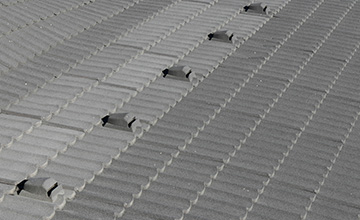
Exhaust vents: Located at the roof peak, these pull hot air out. Ridge vents run along the roof's apex. Gable vents sit on the gable ends. Turbine or whirlybird vents spin in the wind to exhaust air.
Air flow: Cool air enters through soffits. Warm air rises and exits through ridge vents. This creates continuous circulation without any mechanical assistance.
The system works because hot air naturally rises. Gravity and temperature differential do the work.
How Much Ventilation Does Your Attic Need?
The industry standard is 1 square foot of ventilation for every 150 square feet of attic space (with a 1:1 ratio of intake to exhaust vents).
For a 2,000 square foot home with a typical attic, that's roughly 13 square feet of total ventilation. Split between intake (soffits) and exhaust (ridge).
That sounds simple, but many homes fall short. Older homes were built with minimal ventilation. Renovations sometimes block vents. Additions create uneven ventilation.
A roofing contractor can assess your attic and calculate whether you have adequate ventilation. If not, adding vents is relatively straightforward and affordable.
Signs Your Ventilation Is Failing
If any of these apply to your home, your attic ventilation needs attention:
Visible mold or mildew: Black or green spots in your attic, especially along rafters or sheathing, indicate moisture accumulation.
Water stains or wood damage: Dark stains, soft spots, or visible rot mean moisture has been present for a while. This is advanced deterioration.
Musty odors: A damp, moldy smell from your attic is a red flag. Odor often precedes visible mold.
Shingles curling or deteriorating prematurely: If your roof looks prematurely aged, moisture damage from below might be contributing.
Ice dams in winter: Ridge ice that accumulates suggests warm attic air is melting snow on the roof.
Hot upstairs bedrooms in summer: If your second floor stays significantly warmer than the first, attic ventilation might be inadequate. Heat is accumulating instead of escaping.
High cooling costs: If your electric bill spikes in summer, your AC might be fighting attic heat because ventilation is poor.
Sagging or warped roof: Moisture-damaged wood weakens. Over time, this can cause visible deformation of the roof line.
Any of these signs warrant a professional attic inspection.
Hampton Roads Humidity Makes Ventilation Critical
The Chesapeake Bay and Atlantic Ocean keep Hampton Roads humid year-round. Summer humidity often exceeds 70 percent. Winter humidity stays elevated too.
This constant moisture creates ideal conditions for mold and mildew if ventilation is inadequate.
In drier climates, substandard ventilation might cause problems slowly. In Hampton Roads, the climate accelerates deterioration.
Moisture-laden air enters your attic through wall joints, plumbing penetrations, and air leaks around ducts. Without ventilation to move this air out, it accumulates. Given the region's humidity, problems develop quickly.
Adequate ventilation is the difference between a healthy attic and a moldy, rotting one.
Can You Have Too Much Ventilation?
Technically, yes. Over-ventilation can allow outside weather directly into your attic, defeating the purpose of the attic space itself.
But this is rare. Most homes are under-ventilated, not over-ventilated.
A roofing professional can assess your specific situation and recommend ventilation that balances temperature and moisture control without compromising the attic's insulation barrier.
Ventilation and Energy Efficiency
Proper ventilation reduces cooling costs. How much?
Studies show well-ventilated attics reduce cooling costs by 10-15 percent in hot climates. For a typical Hampton Roads home, that's $100-$200 annually.
Over 10 years, ventilation improvement pays for itself through energy savings alone. That's not counting the damage prevention value.
Improving Your Attic Ventilation
If your attic is inadequately ventilated, options include:
Adding soffit vents: If soffits are currently solid, punching vents allows air intake.
Adding ridge or gable vents: These provide exhaust paths for hot air.
Clearing blocked vents: Insulation sometimes gets pushed over soffit vents during attic work. Clearing this blockage can dramatically improve circulation.
Upgrading ductwork: HVAC ducts should be insulated and sealed to prevent conditioned air from leaking into the attic.
Sealing air leaks: Around plumbing, electrical, and HVAC penetrations, caulk or seal air leaks to reduce moisture entry.
Adding blown-in insulation correctly: Insulation should never block soffit vents. Roofers use baffles to maintain airflow while adding insulation.
A roofing contractor can assess your attic and recommend the most cost-effective improvements.
The Long-Term Value of Ventilation
Think of attic ventilation as insurance.
Proper ventilation prevents mold, extends roof life, reduces energy costs, and protects structural integrity. The investment is small compared to the damage costs of a moldy, deteriorating attic.
In Hampton Roads, where humidity is constant and summer heat is intense, ventilation isn't optional. It's essential.
FAQ: Attic Ventilation
Q: Should I seal my attic to prevent humidity?
A: No. Sealing traps moisture. Ventilation removes it. You want airflow, not airtightness in the attic space.
Q: Does ventilation let cold air in during winter?
A: The attic isn't heated. Cold air in winter is fine. Ventilation prevents winter moisture accumulation, which causes ice dams and structural damage.
Q: Can I block vents to improve insulation?
A: No. Blocking vents traps moisture and heat. It defeats the entire ventilation system.
Q: Should soffit vents have screens?
A: Yes, to keep out insects and debris. But screens should have large openings (0.5 inches or larger) to allow airflow.
Q: How often should vents be cleaned?
A: Every 2-3 years, especially if trees overhang your roof. Debris can clog vents and reduce effectiveness.
Protect Your Attic This Summer
If your attic is hot, humid, or showing signs of moisture damage, ventilation might be the issue.
A professional assessment takes an hour and identifies exactly what your attic needs. From there, improvements are straightforward.
In Hampton Roads heat and humidity, this is one of the best investments in your home's longevity.
ABOUT SB ROOFING
Commercial and Residential Class A Contractor
Here at SB Roofing, we are dedicated to providing quality products, craftsmanship, and service. But, more importantly, we want to assure that you are completely satisfied with the job we do for you.
We are experienced providers of the industry's most secure residential roofing solutions, providing Hampton Roads homeowners with over 25 years experience. From immediate roofing estimates to quick service to final clean-up, we have built our reputation on protecting your most important investment - your home!
We pay special attention to detail by having continuous job supervision and highly qualified installers on every job. Also, SB Roofing maintains discreet relationships with roofing manufacturers and distributors, allowing us to provide you with the best prices, availability and selection at all times. And our work is backed by a full warranty that covers labor & materials.