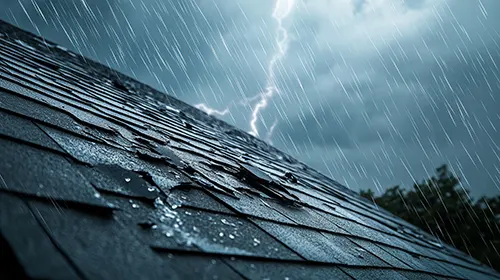
If you've lived in Hampton Roads for any length of time, you know the pattern: a clear June morning, building humidity through the afternoon, then — without much warning — a fast- moving thunderstorm that drops heavy rain, drives wind from the bay or the Atlantic, and moves on by dinner. What it leaves behind, however, can be significant. Downed tree limbs, scattered shingles, damaged gutters, and compromised flashing are all common outcomes of Virginia Beach's summer storm season.
If your roof took a hit, here's exactly what to do — step by step.
Step 1: Prioritize Safety — Stay Off the Roof
We know the instinct is to get up there immediately and assess the damage. Don't. Wet roofing surfaces are extremely slippery, and storm damage can weaken structural areas that look perfectly stable from the outside. Wait until conditions are dry and, even then, leave the physical inspection to a licensed roofing professional with proper safety equipment and training. From the ground, you can conduct a preliminary visual assessment: look for missing shingles, debris on the roof, damage to the fascia or gutters, and any obvious holes or gaps.
Step 2: Document Everything Before Touching Anything
Before doing any temporary repairs or cleanup, document all visible damage thoroughly. Take photos and video of your roof from every accessible angle — the street, the backyard, from upper-floor windows if possible. Also document interior damage: water stains, wet drywall, damaged ceilings, standing water. This documentation is essential for your homeowner's insurance claim and can make the difference between a full payout and a disputed one. Date-stamp everything, and note the time and nature of the storm event. Local news archives can help you document that a severe weather event occurred.
Step 3: Prevent Further Damage with Temporary Measures
If there is an obvious opening in the roof — a hole from a fallen limb, for example — and rain is forecast again soon, temporary tarping can prevent additional water intrusion. This is a short- term measure only. Use heavy-duty tarps secured properly; improperly installed tarps can cause additional damage or safety hazards. If you're not comfortable doing this safely, call a roofing professional for emergency service. SB Roofing provides emergency response for Hampton Roads homeowners.
Do not attempt permanent repairs before an insurance adjuster has assessed the damage, as this can complicate your claim.
Step 4: Call a Licensed Local Roofer for a Professional Inspection
A post-storm roof inspection by a licensed Virginia roofing contractor should happen as quickly as possible — ideally within 24–48 hours of a significant event. An experienced roofer will identify both obvious and hidden damage: cracked decking, displaced flashing, compromised attic ventilation, and water infiltration that isn't yet visible from inside the home. Be extremely cautious of out-of-state "storm chasers" — contractors who descend on Hampton Roads neighborhoods after major weather events, offering fast and cheap repairs. Work with an established local company with verifiable references in the Virginia Beach and Chesapeake community.
Step 5: File Your Insurance Claim Promptly
Contact your homeowner's insurance provider as soon as possible after a storm event. Most Virginia insurance policies require claims to be filed within a specific timeframe after damage occurs. Have your documentation ready — photos, video, and the written assessment from your roofing contractor. A reputable roofer can often help you navigate the claims process and communicate directly with your adjuster if needed.
FREQUENTLY ASKED QUESTIONS
Does homeowner's insurance cover storm roof damage in Virginia?
In most cases, yes. Standard Virginia homeowner's insurance policies cover sudden, accidental damage caused by wind, hail, fallen trees, and other storm-related perils. They do not cover damage from wear and tear or pre-existing conditions. The key is filing promptly and documenting thoroughly.
How quickly should I get my roof inspected after a storm in Hampton Roads?
As soon as possible — ideally within 24 to 48 hours. Delaying an inspection allows water to penetrate deeper into the roof structure, insulation, and framing, significantly increasing repair costs and the risk of mold growth in Hampton Roads' warm, humid climate.
What if the storm damage isn't obvious?
Not all storm damage is immediately visible. High winds can lift and re-seat shingles, weakening the seal without visibly displacing them. Hail can bruise shingles in ways that only appear as granule loss over time. A professional inspection catches hidden damage that a visual check from the ground will miss.
What if a contractor tells me I need a full replacement after every storm?
Be cautious. Not every storm event warrants a full roof replacement. A trustworthy local contractor will give you an honest assessment and recommend the most appropriate solution based on the actual condition of your roof.
ABOUT SB ROOFING
Commercial and Residential Class A Contractor
Here at SB Roofing, we are dedicated to providing quality products, craftsmanship, and service. But, more importantly, we want to assure that you are completely satisfied with the job we do for you.
We are experienced providers of the industry's most secure residential roofing solutions, providing Hampton Roads homeowners with over 25 years experience. From immediate roofing estimates to quick service to final clean-up, we have built our reputation on protecting your most important investment - your home!
We pay special attention to detail by having continuous job supervision and highly qualified installers on every job. Also, SB Roofing maintains discreet relationships with roofing manufacturers and distributors, allowing us to provide you with the best prices, availability and selection at all times. And our work is backed by a full warranty that covers labor & materials.